


Deaf Arts
Deaf Arts (work in progress)
For more information about Deaf Arts and current Deaf Artists, go to: https://deaf-art.org
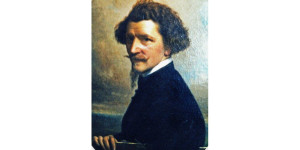
1815–1894: Léopold Loustau (FR)
Born on May 26th, 1815 Loustau was a French deaf artist who produced portraits, history and genre scenes.
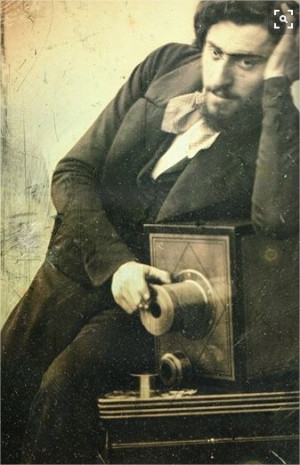
1823 - 1875: Bruno Braquehais, Photographer (FR)
Bruno Braquehais was born in Dieppe, France in 1823. Although records don’t state how he lost his hearing, Braquehais was deaf from a young age. When he was nine years old, he started at the Royal Institute of the Deaf and Mute in Paris. He later found work as a lithographer.
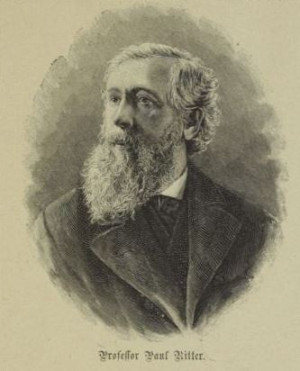
1829 - 1907: Paul Ritter, Painter (DE)
At the age of four, Paul Ritter became deaf due to illness. He became known in particular for his large-format architectural pictures of old Nuremberg with historical figure staffage against the background of the historically faithful architecture of the old town.
1860 - 1911: Heinrich Fick (DE)
Heinrich Fick was a deaf German painter, disability rights activist and mountaineer.
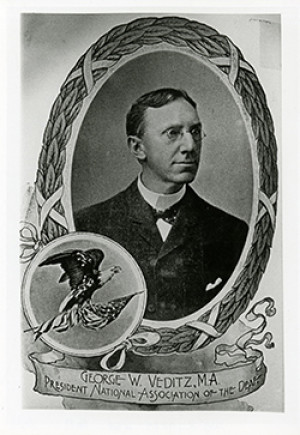
1861 - 1937: George W. Veditz, First Person to Film Sign Language (ASL)
In 1904, Veditz became president of the National Association of the Deaf (NAD). He had strong opinions about preserving sign language, so during his years as president he worked closely with Oscar Regensburg, the first chairman of NAD's Motion Picture Fund Committee to produce some of the earliest films that recorded sign language.
Consequently, these videos are some of the most significant documents in deaf history.
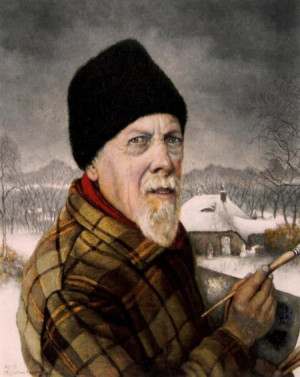
1867 - 1959: Johannes Graadt van Roggen (NL)
Johannes Mattheus Graadt van Roggen (Amsterdam, 28 May 1867 – Alkmaar, 26 August 1959) was a Dutch draftsman, painter and graphic artist.
Graadt van Roggen was deaf from the age of three as a result of meningitis
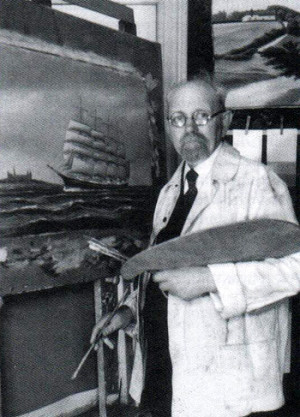
1870-1950: Peder Christian Pedersen, Painter (DK)
Peder Christian Pedersen was born on 12-10-1870 and died on 11-5-1950 in Aalborg. Ship paintings and other maritime environments were his specialty.
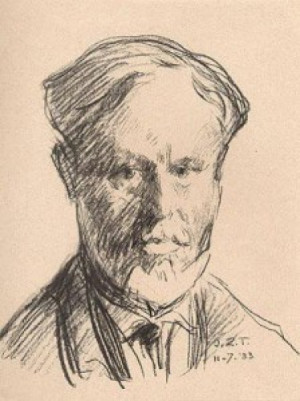
1872 - 1947: Jan Zoetelief Tromp (NL)
Johannes Tromp was born on December 13, 1872 in Jakarta (then Batavia). Tromp painted the daily lives of the fishing community, and especially pictures with children, showing them playing on the beach, shepherding goats or returning from the dunes. These scenes are all idyllic and resonate with a familial contentment that presumably reflected his own.
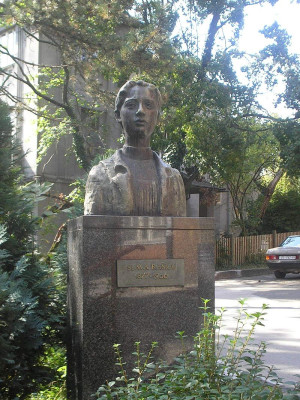
1877 - 1906: Slava Raškaj, Painter (Croatia)
Slava Raškaj (2 January 1877 – 29 March 1906) was a Croatian painter, considered to be the greatest Croatian watercolorist of the late 19th and early 20th century.
Being deaf ever since her birth, due to the difficulties in communication, she gradually withdrew from people, but not before her talent was noticed.
Her works have been exhibited since 1898 in art pavilions of Zagreb, Moscow and Saint Petersburg. It was the best part of her short career when most valuable works were done, especially those painteid in this very Garden, by the ponds. A series of paintings of water lilies (‘Lopoci’) are considered as a sort of a hallmark of this great artist.
Bust of Slava Raškaj in Nazorova Street in Zagreb.
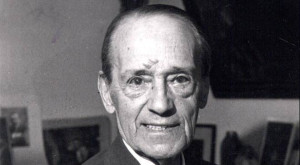
1879 - 1963: Valentín de Zubiaurre Aguirrezábal, Painter (ES)
Valentin de Zubiaurre Aguirrezábal ( Madrid , 1879 - 1963 ), was a Spanish painter. He was born deaf, as was his brother Ramón de Zubiaurre , also a painter, three years his junior. Both were children of the musical composer Valentin de Zubiaurre Urinobarrenechea .
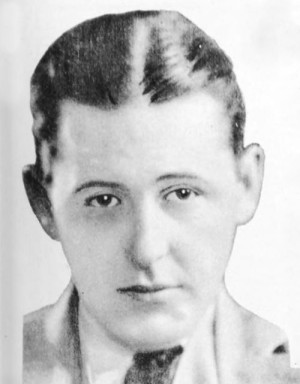
1888 - 1964: Melbourne Spurr (USA)
Melbourne Spurr was an American photographer. He is best known for his photographs of film actors, taken between 1916 and around the mid-1930s.
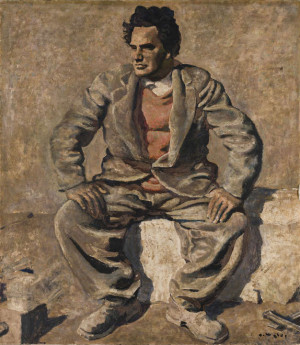
1893 - 1975: Gustinus Ambrosi, Sculptor (AT)
"The later sculptor and poet Gustinus Ambrosi, born on February 24, 1893, lost his hearing in 1900 as a result of meningitis."
"In 1913 the sculptor, who was considered brilliant at an early age, received a state studio for life in Vienna and from that year attended the Academy of Fine Arts in Vienna."